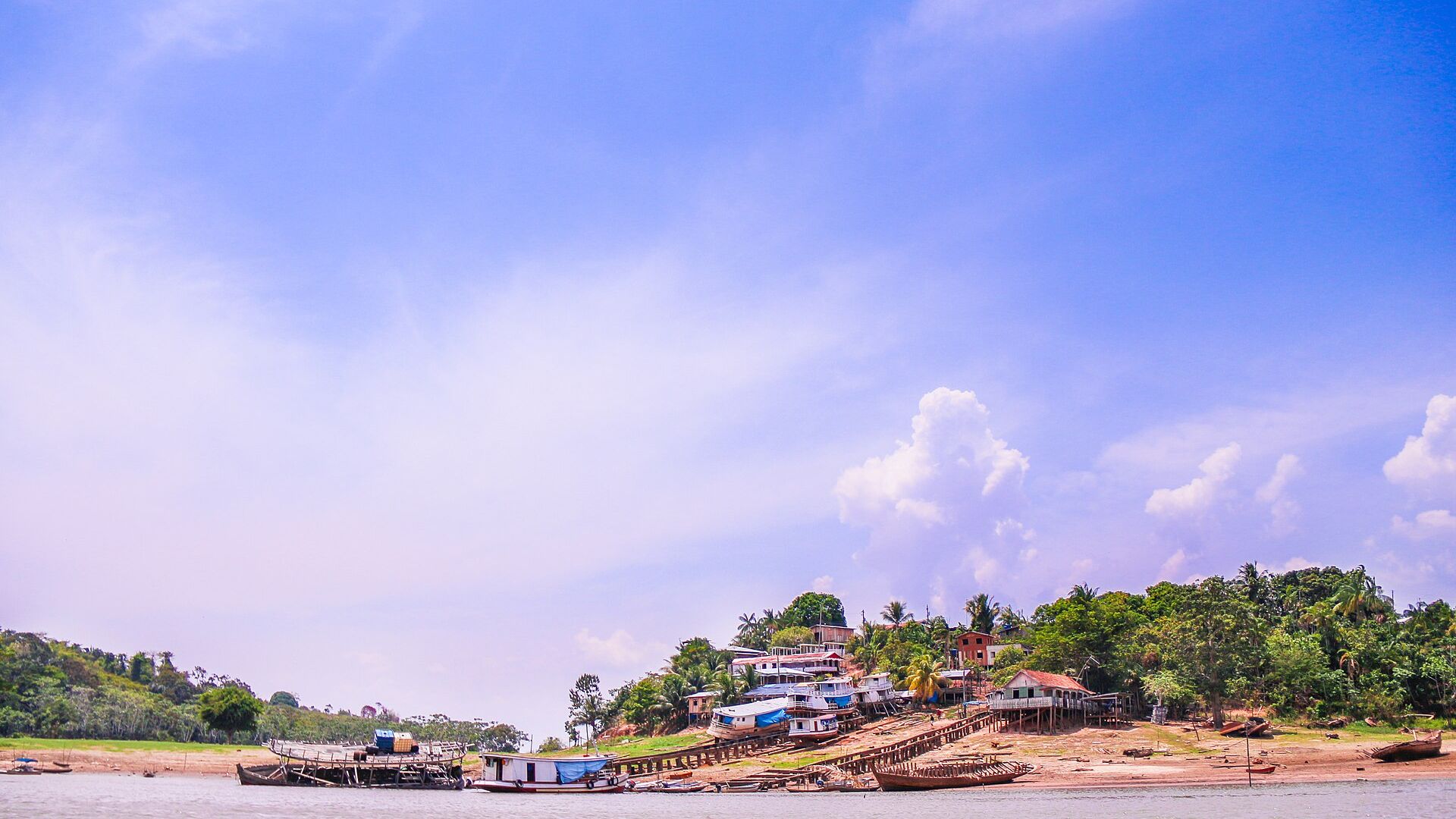
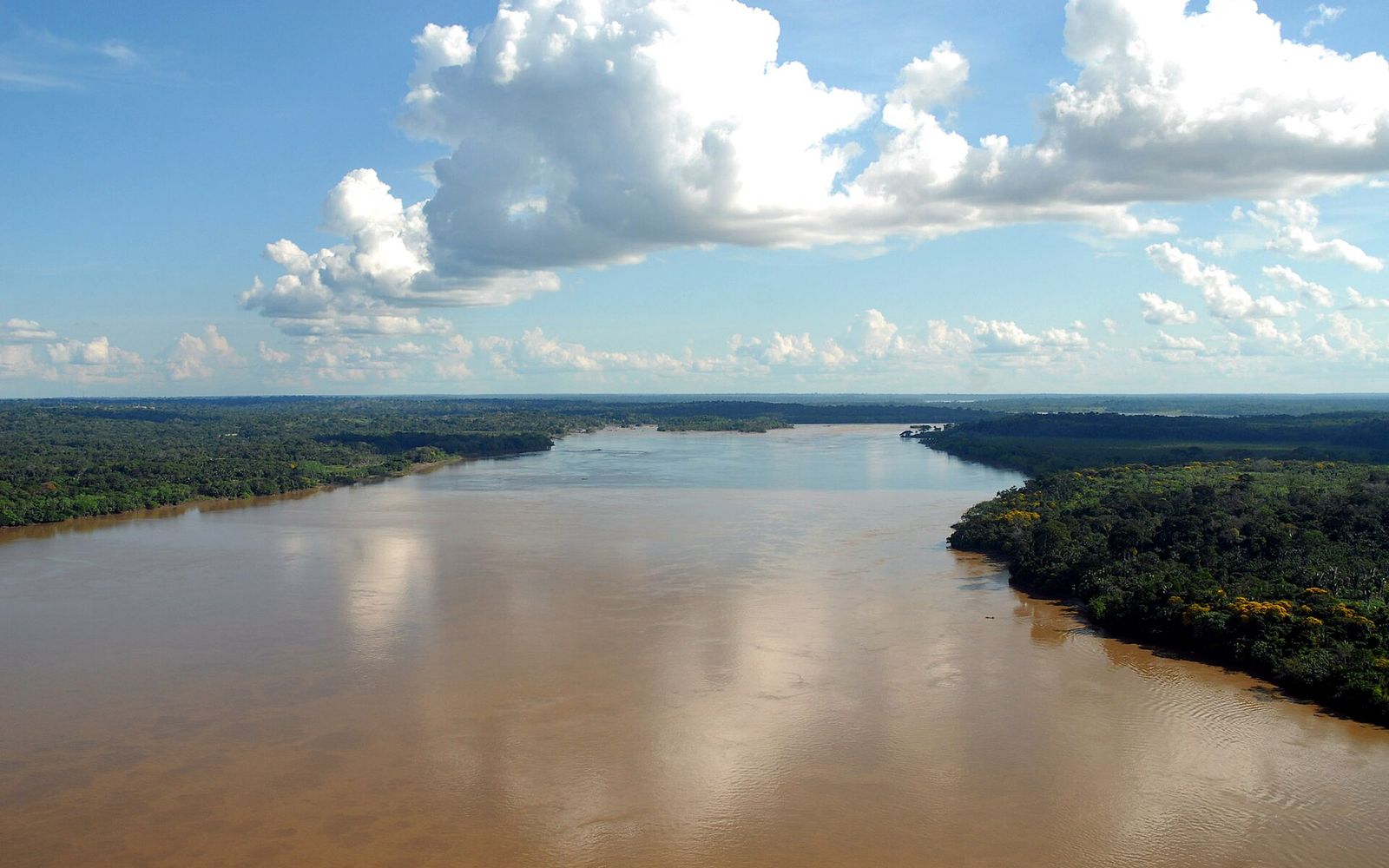
Madeira River · Manicoré, Amazonas, Brazil
The first to see it lives here.
In riverside communities, the first sign of a disease shows up in the backyard, in the river, in an animal that fell ill. Saúde nas Margens trains local residents as health-surveillance volunteers — and gets that warning to the health team in time.
The challenge
When the health post is hours away by boat, every day counts.
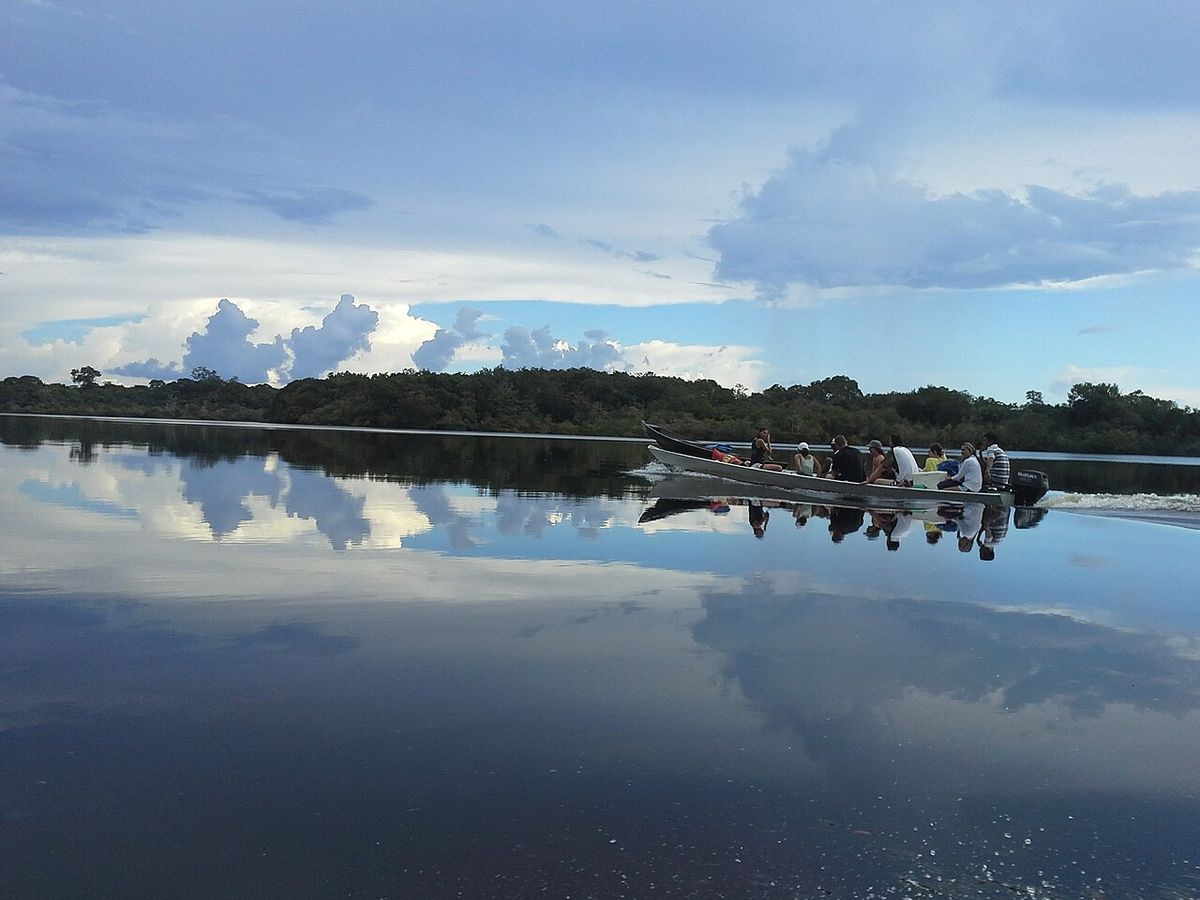
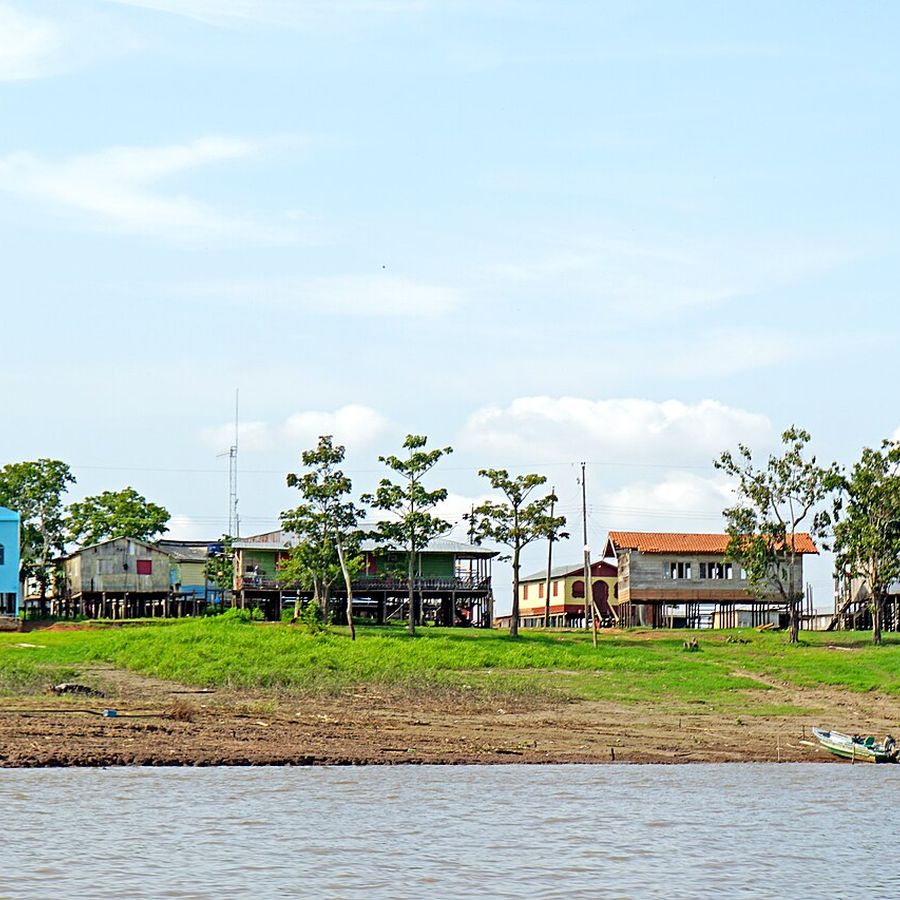
Manicoré lies about 350 kilometres from Manaus, on the middle stretch of the BR-319 highway, with some 230 communities spread across a vast territory. Floods and droughts change the river routes, mobile signal is rare, and a fever, a sick animal or water that looks wrong can take weeks to reach someone who can act. In the fire season the municipality — part of the Amazon’s “Arc of Fire” — also lives with the respiratory problems caused by smoke.
That gap is where an outbreak grows. The project exists to shorten it.
Who takes care
People from the community itself, trained to look after everyone’s health.
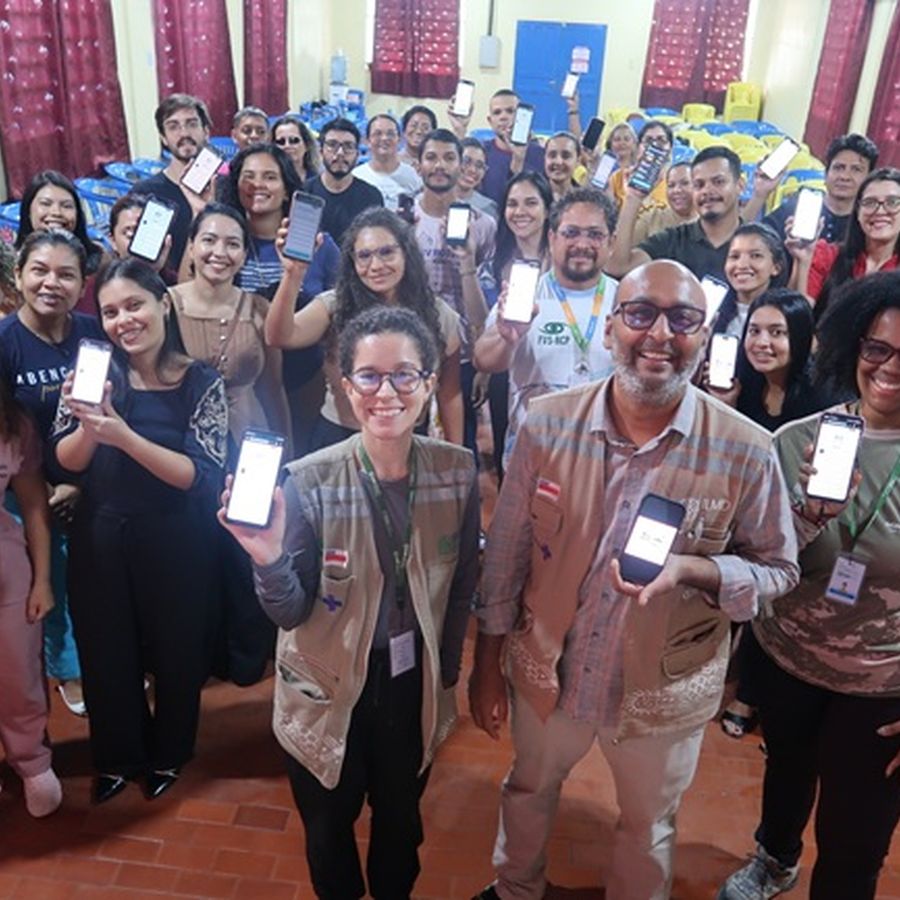
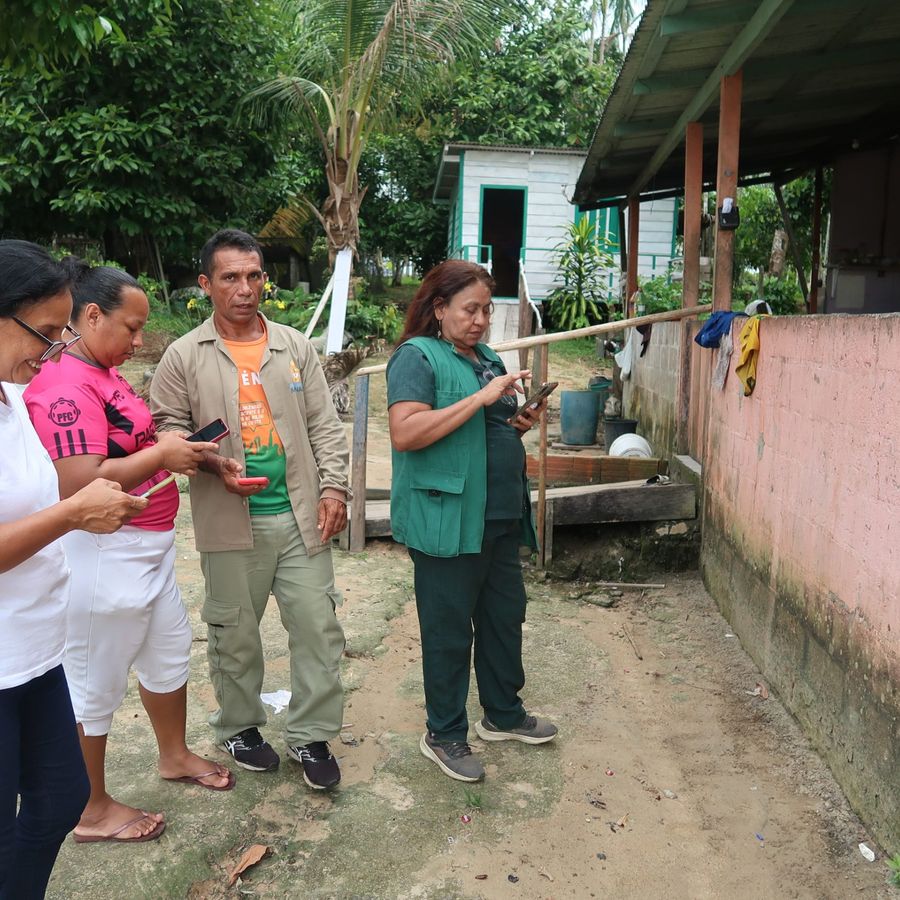
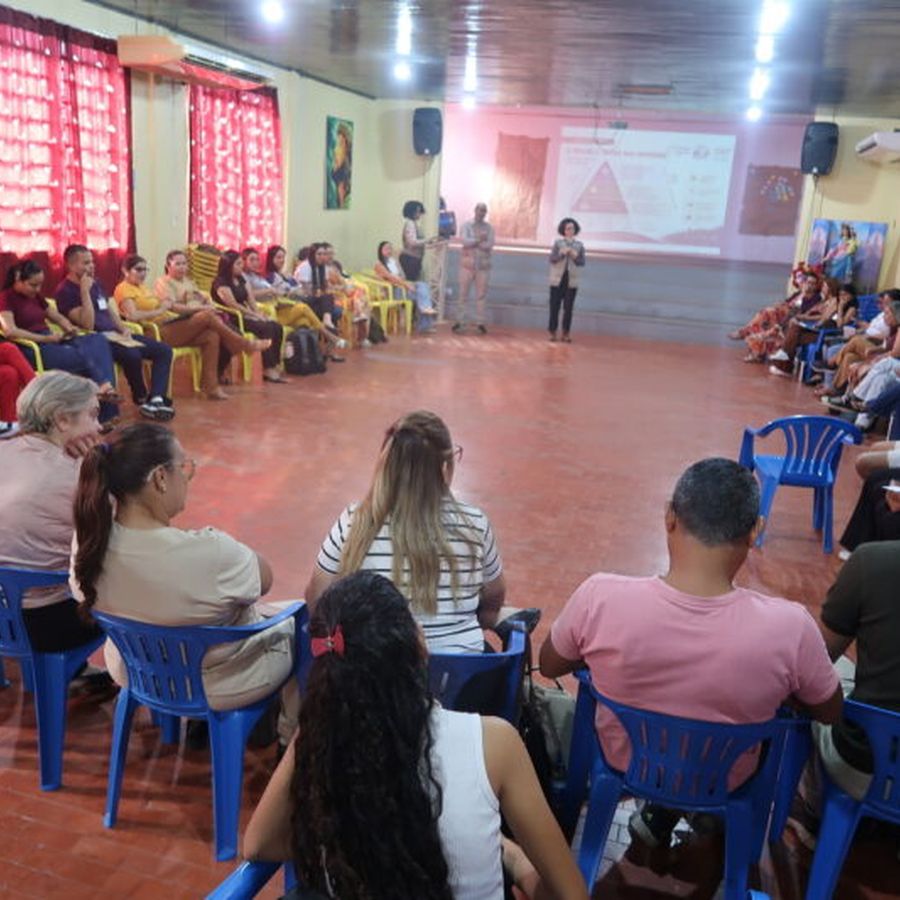
Community health workers, endemic-disease control agents, teachers, Civil Defence teams, environmental staff and community leaders: the people who live and work in the communities become the eyes of health surveillance. They receive training, an app that works without internet, and the support of a health team that responds to every alert.
The tool will help us reach all [the communities] and take whatever action is needed much faster.
Kedson Monteiro, head of Health Surveillance in Manicoré, to Fato Amazônico (September 2026; free translation from Portuguese)
One Health
The health of people, animals and the river is one and the same.
Around 60% of the pathogens that cause human disease come from domestic or wild animals, according to the World Organisation for Animal Health. That is why the project looks at all three at once — the approach known as One Health.
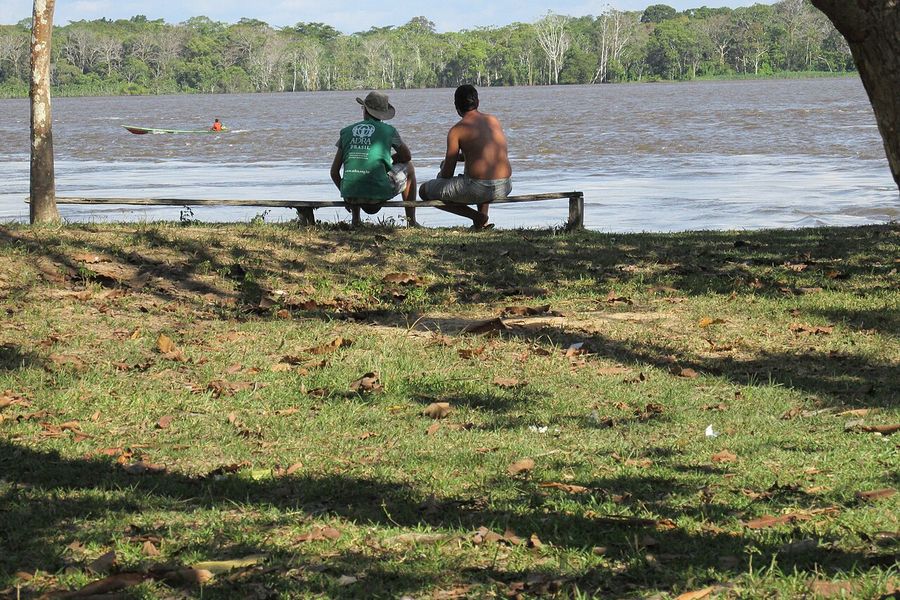
Human health
Diarrhoea and vomiting, respiratory problems, skin wounds, poisonings, work accidents: signs recorded as soon as they appear, without waiting for the next visit.
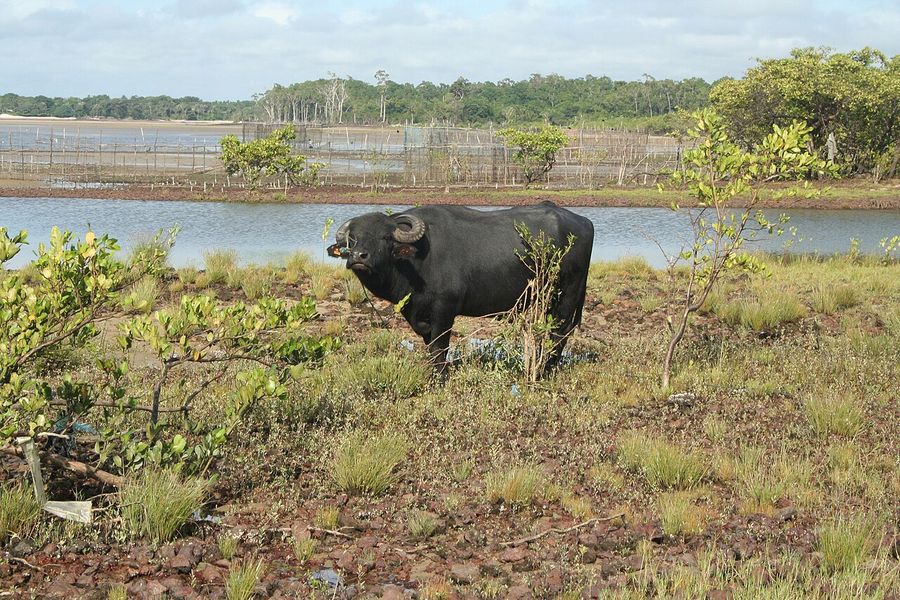
Animal health
Animal attacks, animals found sick or dead, infestations — often the first warning of a disease that has yet to reach people.
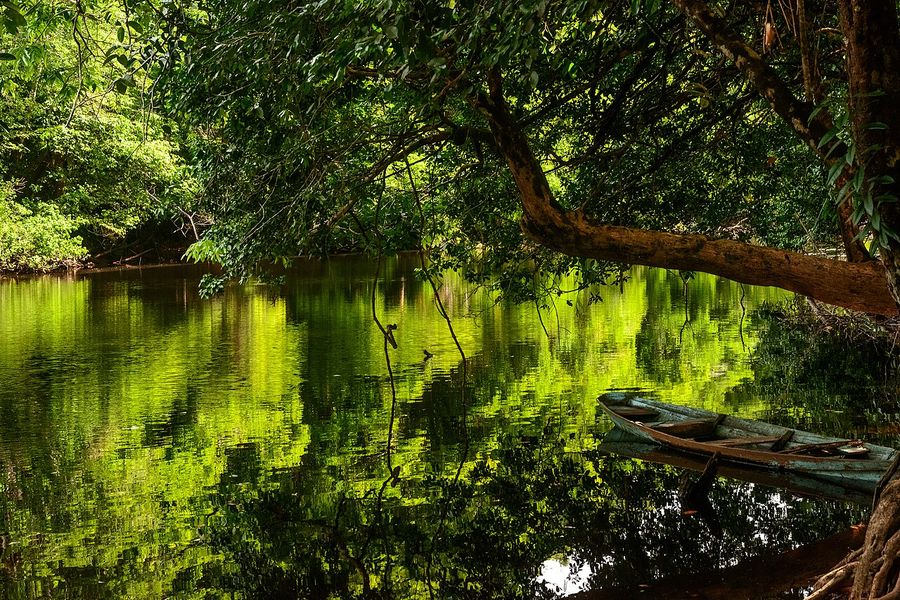
Environment
Fires, flooding, water with an unusual colour or smell, dead fish: changes in the river and the forest that put the community at risk.
How it works
From the backyard to the health team, in four steps.
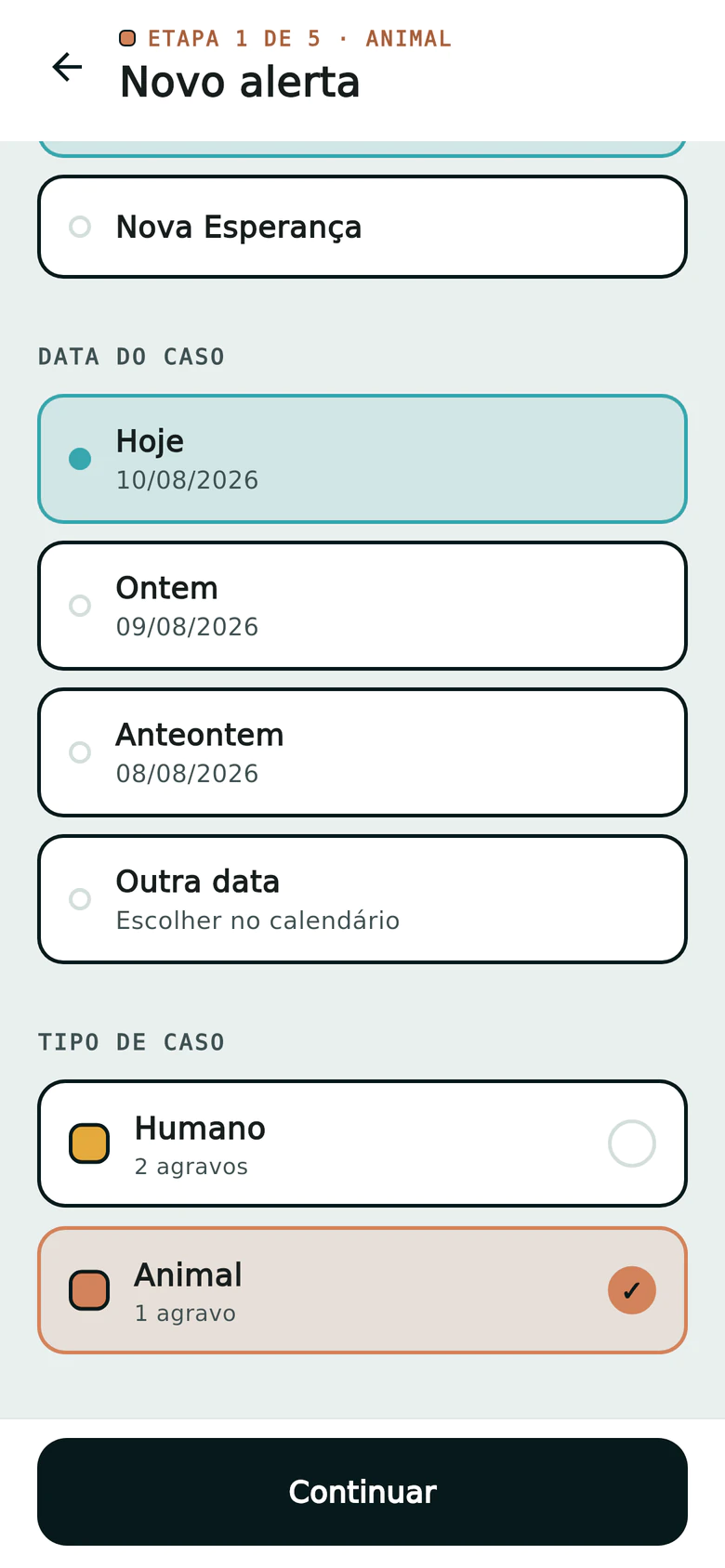
Seen it, report it
The volunteer opens the app and reports what they saw — in a person, an animal or the environment.
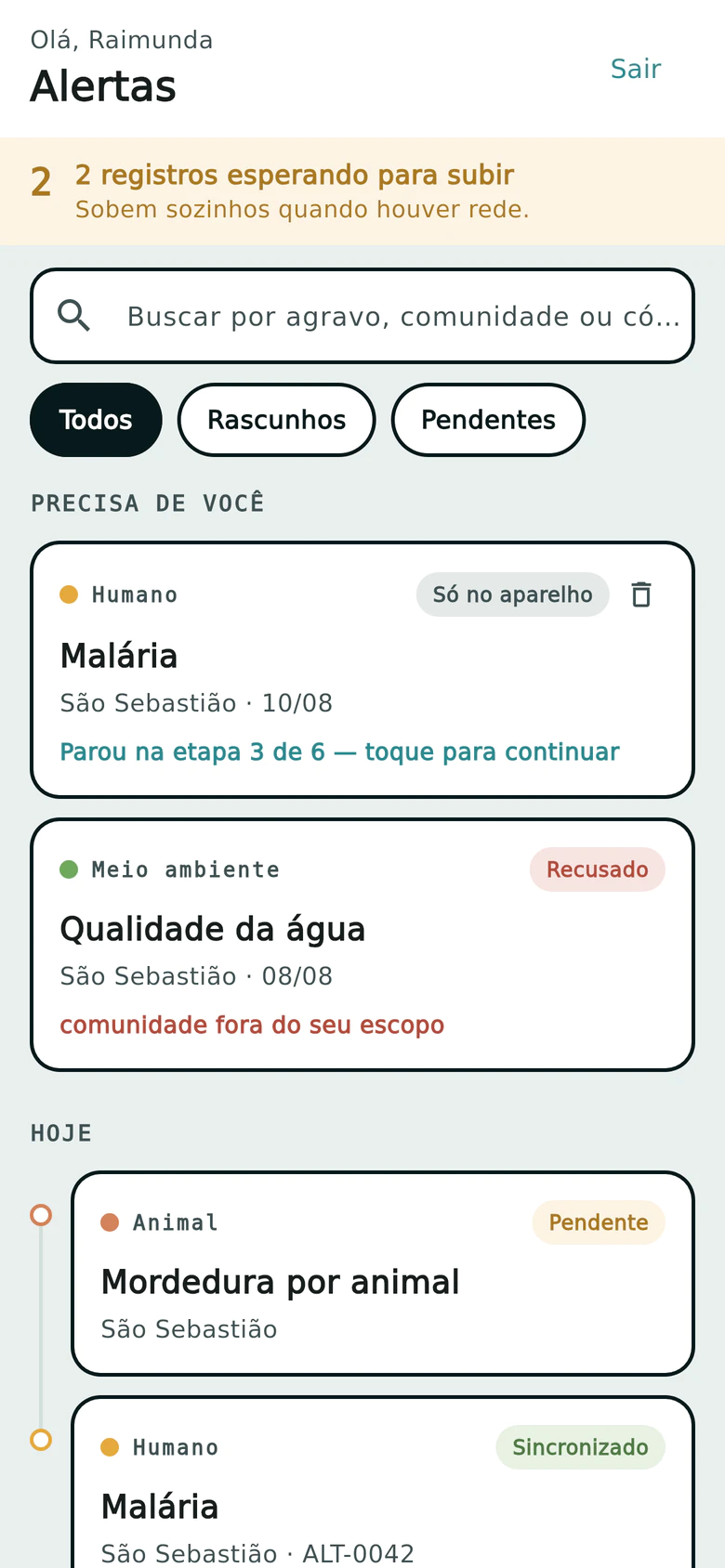
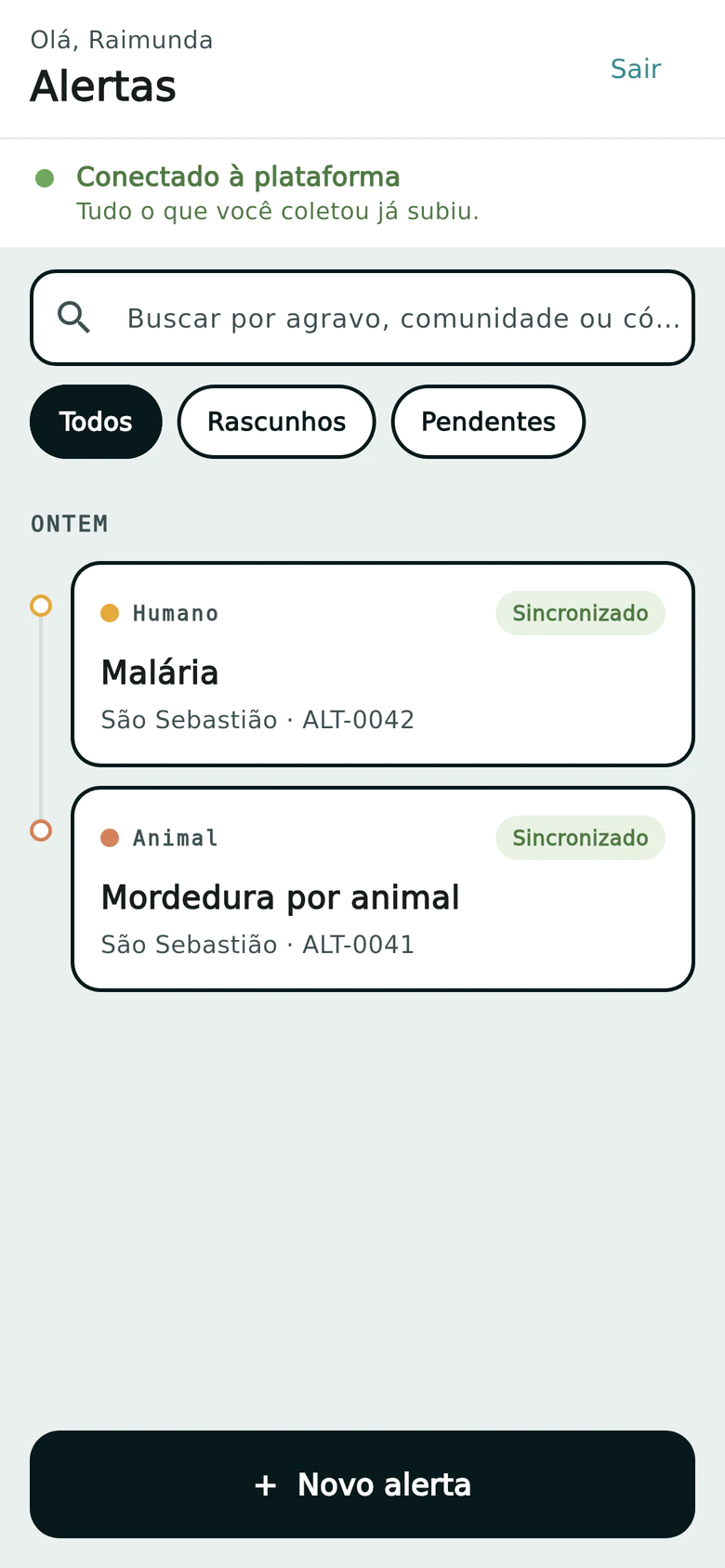
Even offline
The report is stored on the phone and uploads by itself when there is signal — at the jetty, the school, the town centre.
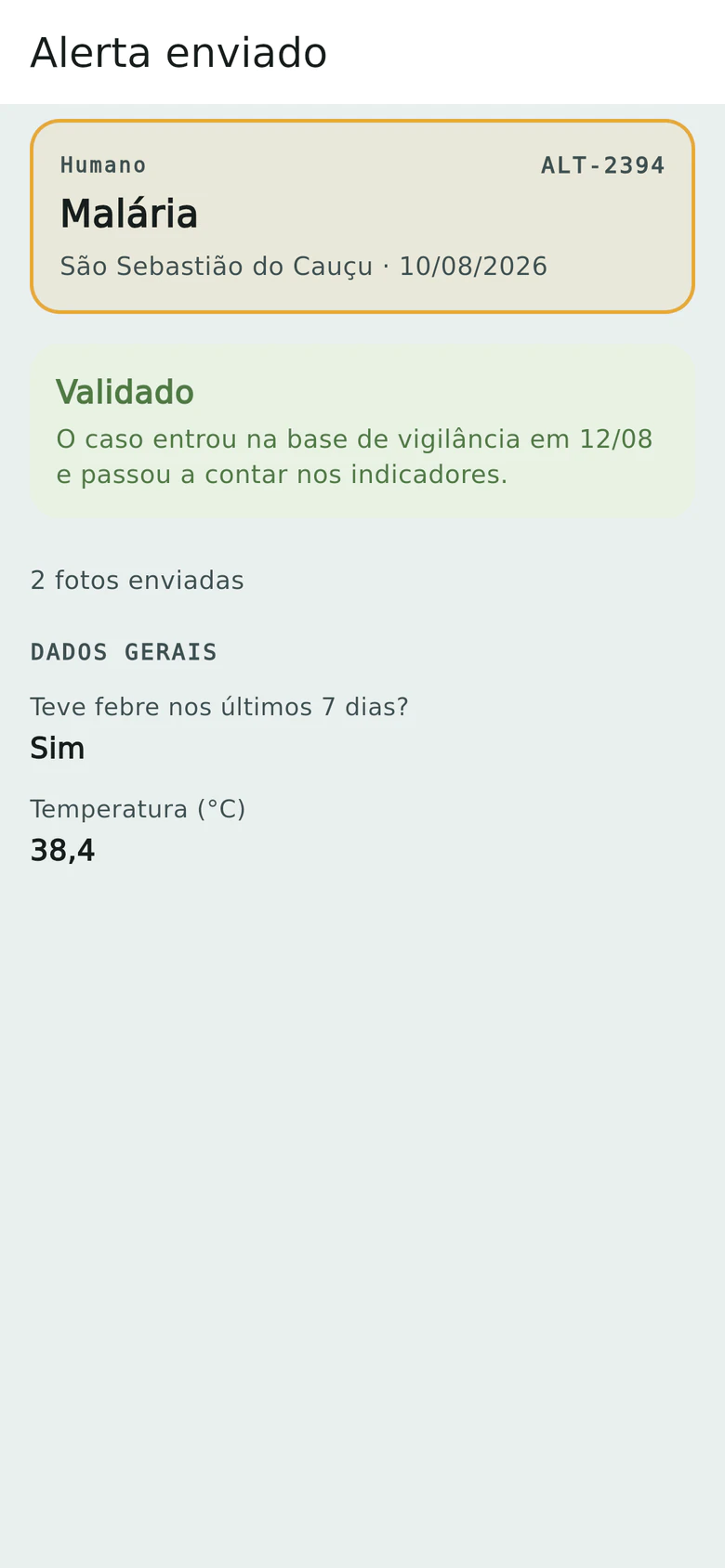
The team checks
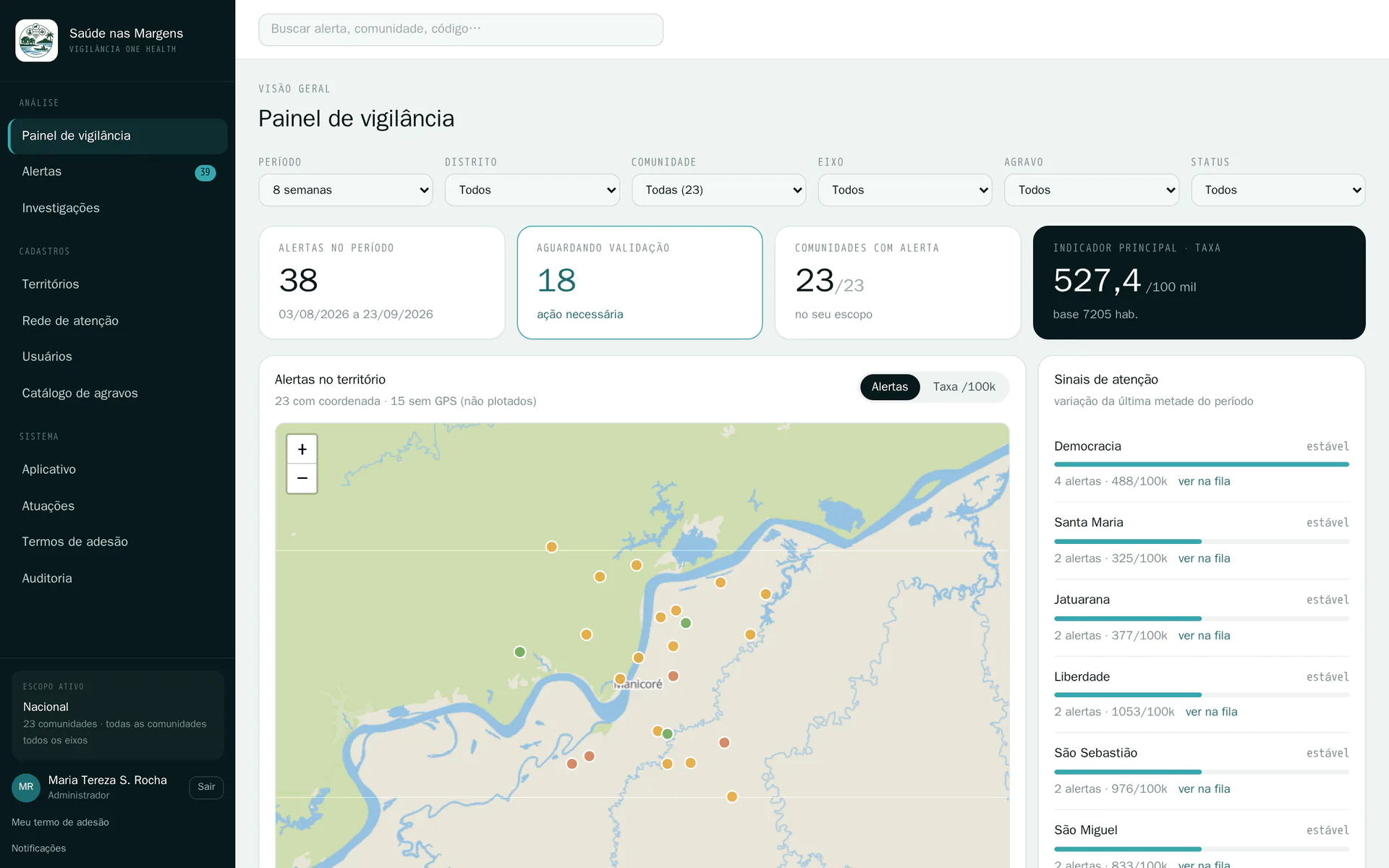
Health professionals receive the alert on the platform, review it and confirm whether it is a case.
The response arrives
Once the case is confirmed, action begins: a visit, guidance, vaccination, water testing.
The project in numbers
350
kilometres from Manaus to Manicoré, on the middle stretch of the BR-319
230
communities in the municipality of Manicoré
44
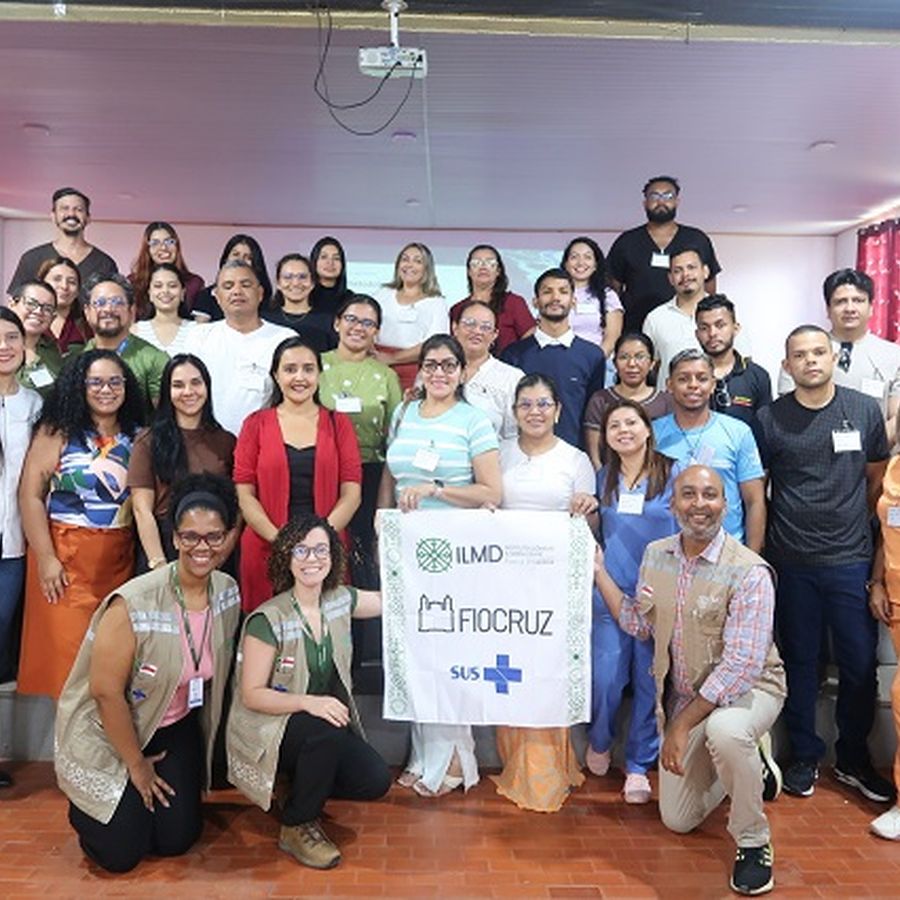
professionals at the first workshop, in July 2026
4
municipal departments working together: Health, Education, Environment and Civil Defence
Sources (in Portuguese): Fato Amazônico and Rádio Rio Mar, September 2026.
Where we work
From the Rio Negro to the Madeira River.
Where it began · the pilot, 2025
Santa Maria e Nossa Senhora de Fátima
On the Lower Rio Negro, in rural Manaus, and in ten more nearby localities. It was there, with the Manaus Municipal Health Department and its Rural Health District, that the method was born and put to the test.
139 alerts recorded during the pilot
Where we are now · 2026
Manicoré, on the Madeira River
On the middle stretch of the BR-319, with communities spread across a vast territory. Here the model scales up to the whole municipality: the Health, Education, Environment and Civil Defence departments work together.
7 Family Health teams in the municipality — 6 riverside and 1 river-boat team
Who we are
Science, Brazil’s public health system and communities working together.
Saúde nas Margens is coordinated by the Leônidas and Maria Deane Institute (ILMD/Fiocruz Amazônia). The pilot, on the Lower Rio Negro, was carried out with the Manaus Municipal Health Department and its Rural Health District. In Manicoré, the project works with the municipal government, bringing together the Health, Education, Environment and Civil Defence departments. The project is supported by the Inova Fiocruz Programme – Public Health Emergencies.
Over the last ten years we have faced threats from emerging diseases such as Zika, chikungunya, yellow fever, SARS-CoV-2, mpox, sporotrichosis, dengue and, most recently, Oropouche fever.
Pritesh Lalwani, public health researcher at Fiocruz Amazônia and project coordinator, to Fato Amazônico (September 2026; free translation from Portuguese)

In the press
What the press is saying about the project
Rádio Rio Mar · 11 September 2026
Fiocruz Amazônia amplia vigilância em saúde com participação de comunidades de Manicoré (in Portuguese)
Agência Fiocruz de Notícias · 9 September 2026
Fiocruz leva projeto com modelo inovador de vigilância participativa ao interior do Amazonas (in Portuguese)
Fato Amazônico · 9 September 2026
Fiocruz Amazônia leva Projeto Saúde nas Margens com modelo inovador de vigilância participativa a Manicoré (in Portuguese)
Amazonas Notícias · 8 September 2026
Fiocruz Amazônia leva projeto pioneiro de monitoramento de saúde e meio ambiente a 230 comunidades de Manicoré (in Portuguese)
Blog do Hiel Levy · 26 April 2025
Fiocruz desenvolve projeto em comunidades ribeirinhas para proporcionar rapidez na detecção de doenças infecciosas (in Portuguese)
Want to support us, do research with us or take the project to another region?
Get in touch with the Saúde nas Margens scientific coordination.